
In the ever-evolving world of Dungeons & Dragons, the sea elf stands as a testament to the game's rich lore and adaptable character creation. Originally fey creatures shaped by the god Correllon Larethian, their forms changed as they traversed the multiverse after a divine schism. Those who adapted to aquatic realms became the sea elves, ruling underwater kingdoms and battling the horrors of the deep. As of 2026, with the integration of rules from Mordenkainen Presents: Monsters of the Multiverse, sea elves have been refined, offering players a uniquely versatile option for campaigns that span land and sea.
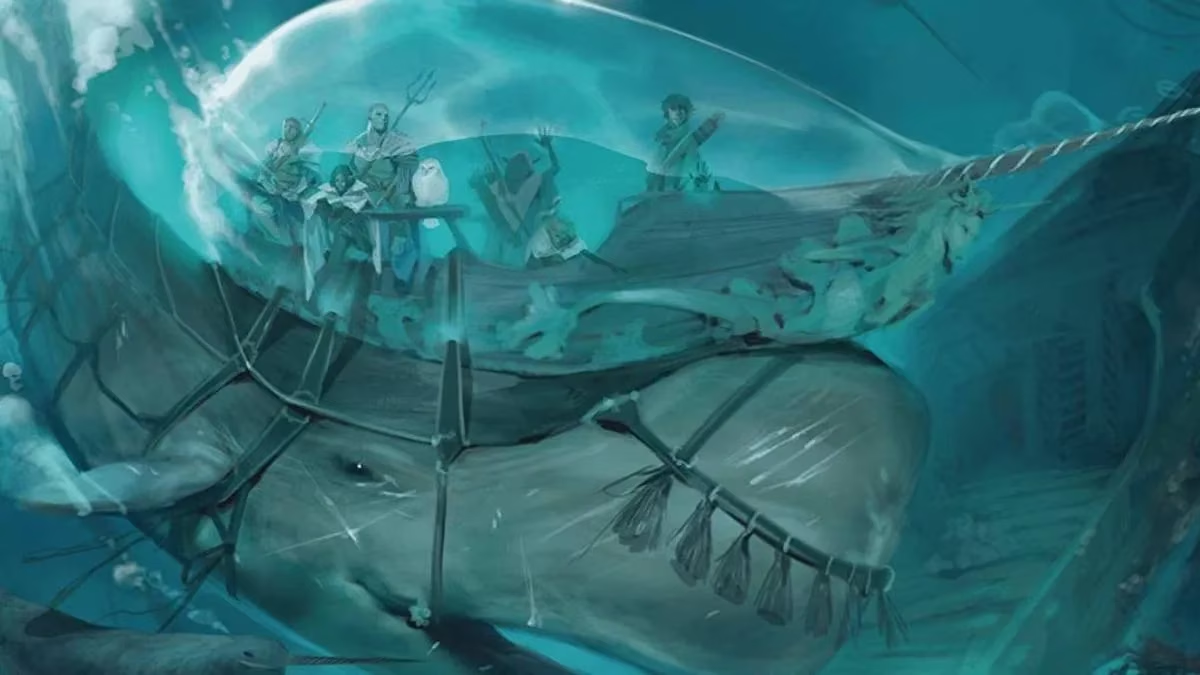
The core appeal of a sea elf character lies in its inherent adaptability. Their viability is, of course, campaign-dependent. They shine brightest in adventures featuring coastal regions, ocean voyages, or underwater exploration—think swashbuckling pirate tales or expeditions to sunken cities. In a purely desert-based campaign, their aquatic prowess might see less use, but in a globe-trotting adventure like a modern interpretation of Tomb of Annihilation, they become an invaluable asset. The key is their suite of racial traits, which have been streamlined and enhanced in recent publications.
Modern sea elves are medium humanoids with the standard elf traits, but with a distinctly oceanic twist. They possess a walking and swimming speed of 30 feet, can breathe both air and water, and have darkvision out to 60 feet. Their Fey Ancestry grants advantage on saves against being charmed, and they have proficiency in Perception. A standout feature is their Friend of the Sea ability, allowing communication with beasts that have a swimming speed. Notably, the updated rules grant them resistance to cold damage, a practical boon for deep dives and frozen waters, while replacing the older Sea Elf Training feature.
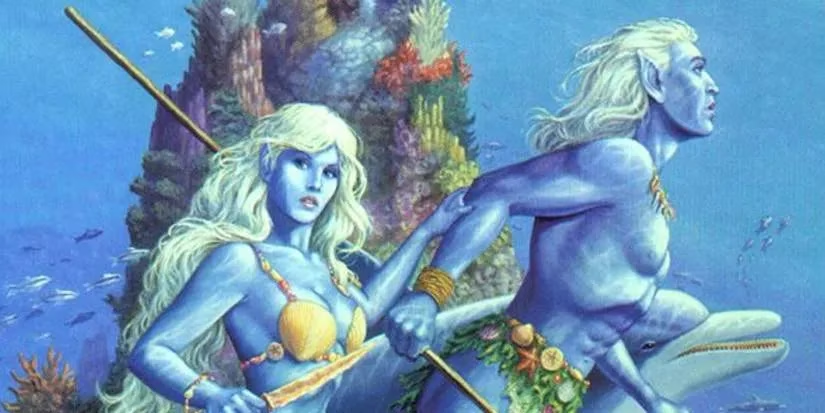
Where the sea elf truly excels is as a Ranger. This class synergy is arguably one of the strongest in the game for exploration-heavy campaigns. A sea elf ranger is a survival expert for any environment—land, sea, or the treacherous border between them. Their swimming speed equals their land speed, eliminating mobility penalties in water. Combined with darkvision and cold resistance, they are perfectly equipped for underwater scouting and combat. Furthermore, needing only a 4-hour trance for a long rest makes them exceptional watchkeepers during wilderness travels in perilous locations.
The ranger's capabilities in aquatic environments surpass even those of a Druid using Wild Shape. While a druid must transform into a potentially weaker beast form (losing spellcasting until very high levels), a sea elf ranger retains full access to their class features, weapons, and spells. To augment this build, consider subclasses that provide aerial reconnaissance. The Beast Master, especially with a hawk companion, offers unparalleled scouting when combined with spells like beast sense. Alternatively, the Drakewarden from Fizban's Treasury of Dragons provides a powerful drake ally, though its flight capability unlocks at 7th level.

Beyond martial prowess, sea elves make formidable spellcasters, turning the tables in underwater combat. Standard D&D 5e rules impose significant penalties for fighting submerged: ranged attacks have disadvantage (with few exceptions), and most melee attacks from creatures without a swim speed are also hindered. Creatures gain resistance to fire damage. For most races, this is a severe debuff. For a sea elf caster, it's a tactical advantage. They operate unimpeded, able to cast spells freely without fear of drowning.
Creative spell selection can allow a sea elf spellcaster to create their own advantageous terrain, even on land. Consider these potent combinations:
-
Control & Manipulation: Spells like shape water (a cantrip), control water, and wall of water can create temporary pools or barriers.
-
Mobility & Defense: Using telekinesis to maneuver a block of water or summoning a friendly Water Elemental via conjure elemental can provide mobile cover and hydration.
-
Tactical Disruption: Any water brought onto the battlefield can hamper enemy forces, extinguishing fires, creating difficult terrain, and interfering with components.
This ability to manipulate the battlefield makes them exceptional controllers, particularly in parties that can capitalize on the environmental effects they create.

In campaigns where the environment is a primary antagonist—such as the disease-ridden jungles of Chult or the endless winter of Icewind Dale—a sea elf ranger or a resourceful spellcaster is not just useful; they are often essential for survival. Their natural resistances, reduced need for sleep, and dual-environment expertise allow them to endure where others perish. They embody the spirit of adaptation that defines their lore, proving that in the right hands, a character attuned to the sea can conquer challenges on any frontier. As D&D continues to expand with new sourcebooks and adventures, the sea elf remains a premier choice for players seeking a character with built-in versatility, rich role-playing potential, and the power to turn the tide of any adventure.