
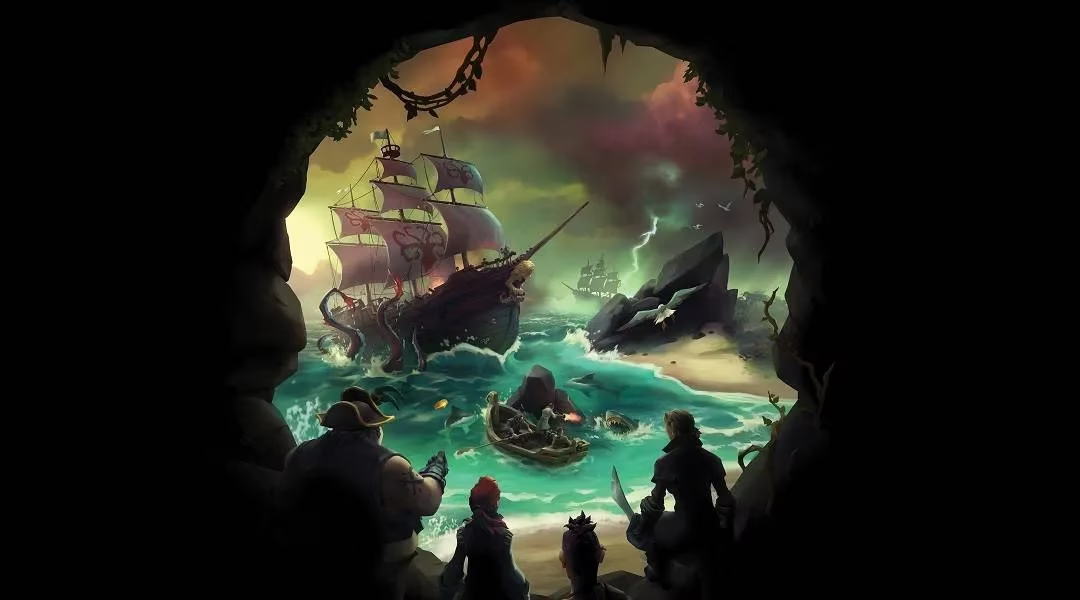
When Rare and Microsoft Studios first released the launch trailer for Sea of Thieves, the message was simple: gather a crew, raise a sail, and chase treasure across a playful pirate sandbox. The trailer showed ship-to-ship battles, buried loot, and a lurking kraken-like threat in the water. It also promised something more important than spectacle: co-op adventure without the risk of scurvy. In 2026, that pitch still feels recognizable. Sea of Thieves is no longer an upcoming release, but a long-running live-service pirate game, and the original trailer remains a useful snapshot of what Rare was selling.
🏴☠️ The Launch Trailer Sold a Shared Fantasy
The trailer did not need a complicated story. It needed a crew. Players could see themselves hunting lost treasure, steering a ship with friends, and scrambling when something huge moved under the waves. That mix of exploration, comedy, and danger was the hook. Sea of Thieves looked less like a rigid pirate simulator and more like a social playground where the stories would come from the players themselves.
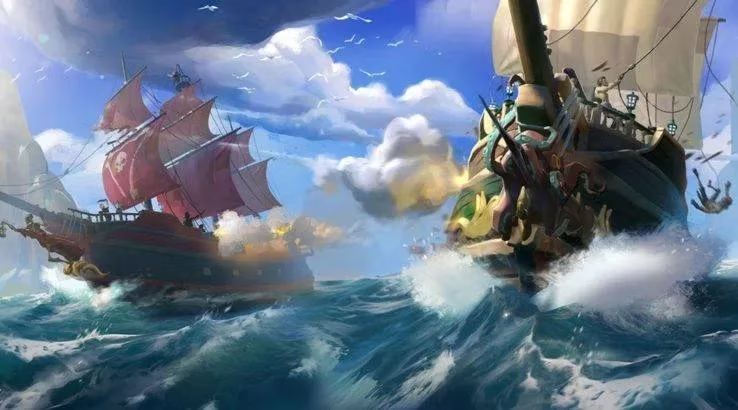
That was a smart pitch. Pirate fantasy is easy to understand, but co-op pirate fantasy is harder to execute. Rare leaned into the idea that a crew could create its own chaos. One player might navigate, another might repair the hull, and a third might fire a cannon while shouting instructions. The trailer suggested that the best moments would not be scripted. They would be shared.
⚓ The Original Launch Details
The original launch date was March 20, 2018, for PC and Xbox One. Before that, Sea of Thieves had a closed beta in January. Server issues caused problems, but the beta was extended by a few days so players who initially struggled to connect could still get time with the game. That decision mattered. It was a small gesture, but it showed that launch-day friction did not have to define the whole experience.
Despite the technical problems, feedback from beta players was generally positive. That is worth remembering in 2026, when live-service games are often judged by their first weekend. Sea of Thieves arrived with a clear identity: a shared pirate sandbox with room for treasure hunts, naval battles, and unpredictable encounters.
| Launch detail | What it meant |
|---|---|
| Co-op pirate sandbox | Players could build stories together rather than follow a single script |
| Kraken-like threat | The sea itself could become a source of surprise and danger |
| Cross-play between Xbox One and PC | Friends could crew up even if they owned different systems |
| Xbox Game Pass on launch day | Subscribers could try the game immediately |
| Real-life golden banana quest | Marketing blurred the line between the game world and the real world |
🎮 Cross-Play Was a Reassurance
One of the most practical promises around Sea of Thieves was cross-platform play between Xbox One and PC. At the time, that was a meaningful reassurance. Players did not have to worry about owning the same hardware as their friends. If one person had an Xbox One and another had a PC, they could still sail together.
In 2026, cross-play is common enough that it can feel ordinary. For Sea of Thieves, however, it was part of the game's social foundation. A pirate crew only works when the crew can actually assemble. Microsoft's cross-play announcement removed a barrier before the game even launched, and that philosophy still fits the game's cooperative identity.
🗺️ Collector Culture and Real-World Quests
Sea of Thieves also received some extra attention on the Xbox One side. There were console bundles and even a custom glow-in-the-dark controller. Those extras were not just merchandise. They signaled that Microsoft was treating the game as a major release, not a small experiment.
The real-life quest for golden bananas was even more unusual. Players were tasked with finding clues and submitting answers through a dedicated page. It was a playful marketing move that matched the game's tone. Sea of Thieves has always been a little silly, and the golden banana hunt understood that. A pirate game can be dramatic, but it can also be ridiculous. That balance is part of the charm.
💡 What Still Matters in 2026
Sea of Thieves has changed a great deal since 2018. It has grown into a long-running live-service title with regular updates, new activities, and a community that knows the seas well. Yet the original launch trailer still captures the core appeal: sailing with others, chasing loot, and reacting to whatever appears on the horizon.
The beta server issues are also a useful reminder. A rough start can be survived if the core fantasy is strong and the team responds. The cross-play promise remains relevant because cooperation is the point. The Game Pass launch-day bonus helped lower the entry barrier, and that idea still matters in 2026, when discovery and access can decide whether a multiplayer game finds its crew.
For players looking back at the launch trailer, the appeal is not nostalgia alone. It is the same promise that has kept Sea of Thieves alive: a shared sea, a shaky plan, and friends who are willing to bail water when the plan goes wrong. That is a pirate fantasy worth returning to.