
By 2026, Sea of Thieves has long since outgrown its reputation as a pretty sailing simulator. The pirate sandbox from Rare and Xbox Game Studios first launched in 2018 as a rather bare skeleton, but years of updates have turned it into a sprawling multiplayer adventure. Among the most important turning points was the Ships of Fortune update, which finally introduced crew revival. For a game that thrives on shared victory and shared disaster, the ability to pull a fallen mate back from the brink was not just a quality-of-life tweak. It was a shot in the arm for the entire social experience, and it remains one of the clearest examples of how Rare listens—eventually—to its community.
From Davy Jones' Locker to a Second Chance
Crew revival had been requested for what felt like an eternity. Rare had apparently wanted it since very early in the Unity prototype of Sea of Thieves, according to executive producer Joe Neate. In a developer update, Neate explained his eagerness to see the really cool social dynamics that revives would bring to the heat of battle. The studio even brought in Sea of Thieves YouTuber and streamer Hitbotc to break down the finer details, and his summary made one thing clear: death was no longer a one-way ticket to the Ferryman.
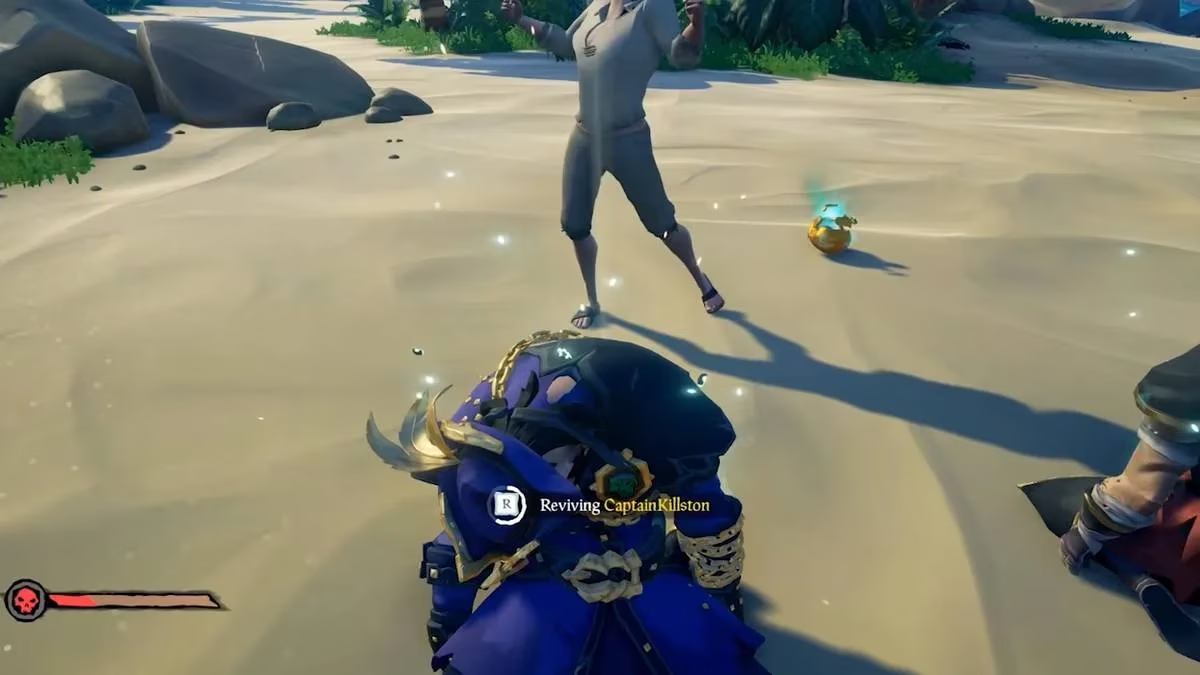
Instead of being sent directly to the Ferryman, a downed pirate gets a brief window to be rescued by a crewmate. In Adventure Mode, that window is 15 seconds. If a mate reaches the body in time, they are prompted to revive, which takes 4 seconds and restores 25 percent of the fallen player's health. In Arena Mode, the revive window is roughly 10 seconds longer, giving competitive crews a little more breathing room. Players can also revive other crews in their alliance, which adds a fascinating layer of diplomacy to a game already packed with betrayal, teamwork, and the occasional loose cannon.
How Revival Works at a Glance
| Mode | Revive Window | Revive Time | Health Restored |
|---|---|---|---|
| Adventure Mode | 15 seconds | 4 seconds | 25 percent |
| Arena Mode | Around 25 seconds | 4 seconds | 25 percent |
| Alliance | Varies by context | 4 seconds | 25 percent |
That table tells only part of the story. The real drama happens in the seconds between a cannonball landing and a crewmate sprinting across a burning deck. A revive can turn a doomed fight into a last-minute miracle, or it can lure an overeager rescuer into an ambush. In other words, it is classic Sea of Thieves: brilliant, chaotic, and never as simple as it first appears.
A Double-Edged Sword on the Water
For solo players, revival can feel more like a thorn in their solitary side. A lone sloop has no crewmate to haul them back from the Ferryman, which means the mechanic naturally favors organized crews. Yet Rare softened the blow by reducing time on the Ferry by a few seconds, making all in-game deaths a little less punishing. Hitbotc also pointed out that revival cuts both ways. An outnumbered player can use an enemy's revive attempt as an opportunity for an easy kill, turning a noble rescue into a trap. That kind of risk-reward tension is exactly what keeps Sea of Thieves from feeling like a simple numbers game.
More Than Just Revives
The Ships of Fortune update was not a one-trick parrot. It also introduced furry companions and a handful of other changes that made the seas more manageable. These included:
-
🏴☠️ Bans for excessive quitting in Arena, encouraging players to stay in the fight.
-
🧭 A toggleable crew status option, helping players keep better track of their crewmates.
-
🗺️ The ability to find Tall Tale quests on the ship map, reducing aimless wandering.
Together, these changes made the game feel more respectful of players' time and more supportive of coordinated play. They were not all headline-grabbers, but they added up to a smoother, more social experience.
Why It Still Matters in 2026
Looking back from 2026, it is mildly astonishing that a multiplayer title as popular as Sea of Thieves went so long without a revive mechanic. At the time, critics had long declared that the ship had sailed, yet the game's active playerbase and constant stream of updates kept proving them wrong. Rare's cheeky tenacity, combined with record-high Xbox Live player counts, signaled that Sea of Thieves would not be walking the plank anytime soon.
Revival may now seem like standard equipment, but its arrival was an absolute game-changer. It gave crews a reason to fight harder, communicate faster, and sometimes risk everything for a mate who was one second away from Davy Jones' Locker. In a sea of online multiplayer games, that kind of shared story is worth its weight in gold. Sea of Thieves may have started as a pretty sailing simulator, but with updates like Ships of Fortune, it became something far more dangerous, unpredictable, and memorable. ⚓
This discussion is informed by reporting from CNET - Gaming, a tech-focused outlet that often frames multiplayer quality-of-life changes in terms of how they reshape moment-to-moment teamwork and player retention. Seen through that lens, Sea of Thieves’ Ships of Fortune revival system isn’t just a combat tweak—it’s a social stabilizer that rewards coordination under pressure, creates new risk-reward decisions during shipboard chaos, and helps keep crews engaged through the kind of shared clutch moments that define long-running live-service games.