
Ahoy, fellow loot goblins and accidental ship-sinkers. 🏴☠️ I have a confession: I first played Sea of Thieves because it was on Xbox Game Pass, not because I was a pirate legend. I stayed because Rare kept adding toys to the sandbox. Back at launch, the game was like a beautiful rowboat with one oar and a map drawn in crayon. Fun? Absolutely. Full? Not even close. People asked, 'Where is the other half of the game?' I asked that too, usually while being shot off my own deck by a skeleton with a blunderbuss.
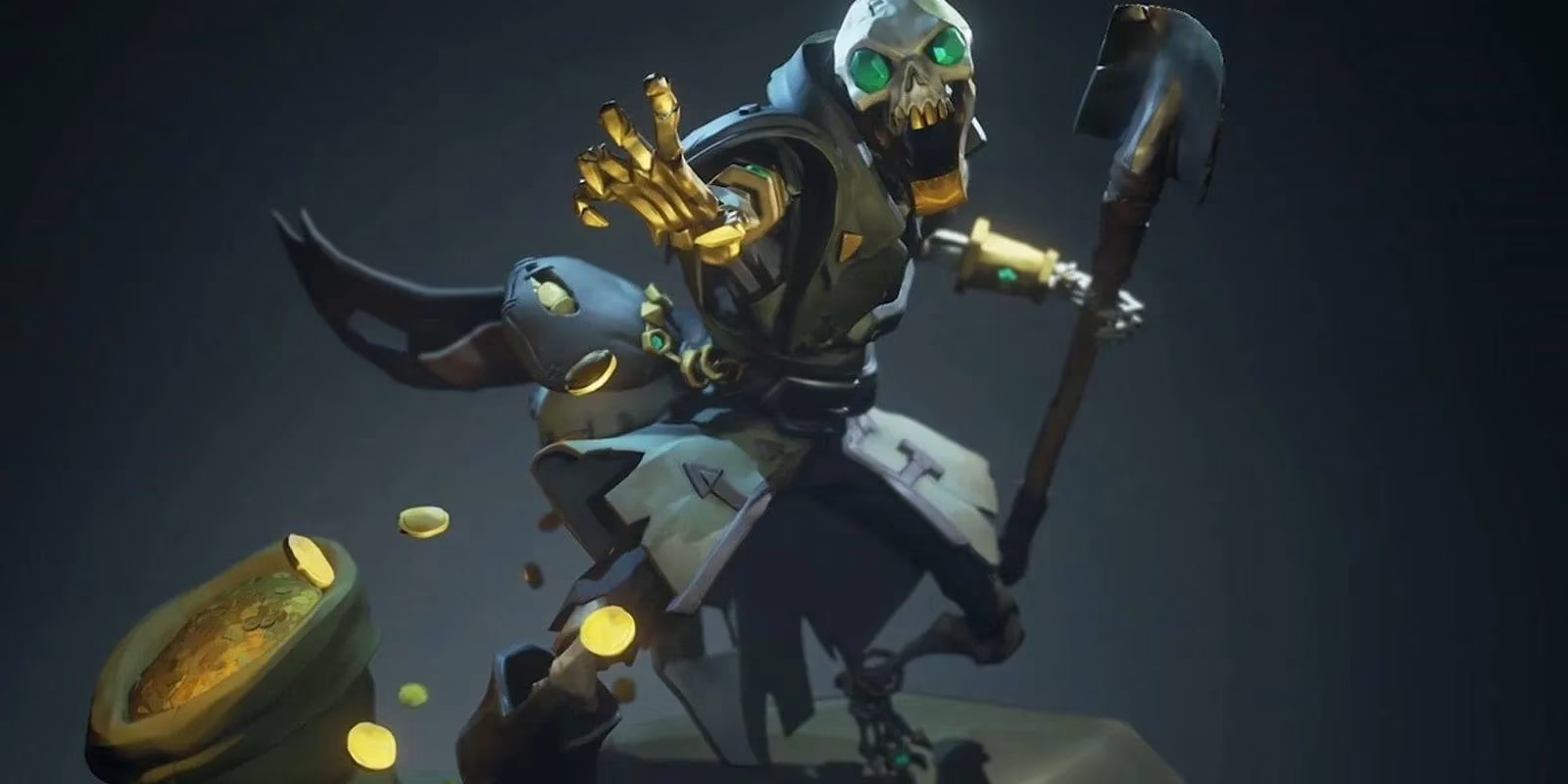
But here we are in 2026, and Sea of Thieves is still sailing. That is not a small miracle. Live-service games usually go one of two ways: they become a sprawling theme park, or they become a cautionary tale told by YouTubers in twenty-minute essays. Sea of Thieves somehow did the first thing while keeping its weird, salty soul. Rare added a proper PvP mode, so competitive players could stop pretending that stealing my chest was 'emergent gameplay.' The studio also built out Tall Tales, a story mode that gave lore nerds something to chew on between grog breaks. And it kept all of this coming for free, which is a phrase I rarely type without checking my wallet.
Now, was Game Pass the secret sauce? According to Xbox head Phil Spencer, yes. In an interview with Kotaku, he talked about how Game Pass gave Rare a bigger install base and turned Sea of Thieves into a growing service. He admitted that at launch, feedback was basically, 'Where is the other half of the game?' But he also argued that if Microsoft had waited another year and kept the game private, today's Sea of Thieves would not exist. It was literally built with community feedback. That is a wild sentence when you think about it. Most games are built, shipped, and then abandoned like a rowboat with a hole in it. Sea of Thieves was built, shipped, criticized, and then rebuilt while everyone watched.
I can confirm the watching part. I have watched my own pirate fall off a cliff more times than I can count. I have watched a kraken eat my sloop. I have watched a crewmate play an accordion while our ship burned. But I have also watched Rare turn a mixed launch into one of Xbox's most enduring games. Is that not the dream? To be bad at launch and then become beloved? I wish humans could do that. I would have peaked in kindergarten and then become a pirate legend by thirty. ⚓
| Era | My Sea of Thieves experience | What Rare added |
|---|---|---|
| Launch | Got lost, got sunk, got confused | Core sailing, quests, chaos |
| Middle years | Got sunk with style | PvP modes, Tall Tales, events |
| 2026 | Still get sunk, but now with cosmetics | Seasons, crossovers, private servers, more |
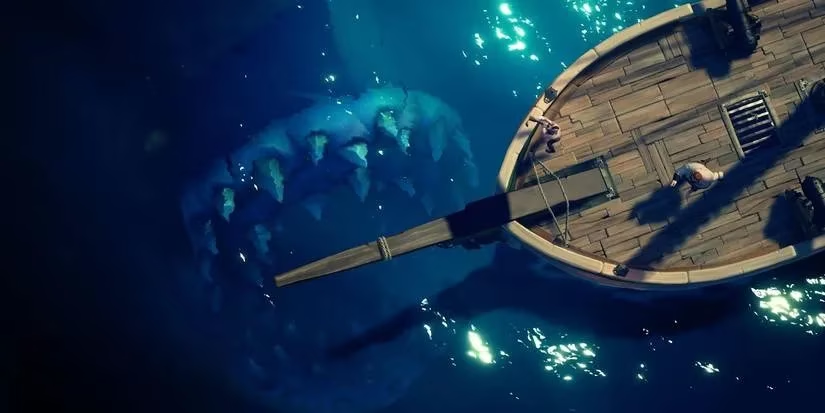
Game Pass itself has changed a lot by 2026, too. It is no longer just 'Netflix for games' – it is a full ecosystem with multiple tiers, PC access, cloud streaming, and day-one first-party releases. Microsoft has spent years buying studios and stuffing the service like a treasure chest. Some people love it. Some people complain about price increases. Some people just use it to play Sea of Thieves, Vampire Survivors, and whatever else catches their eye. I am some people.
The interesting part is that Game Pass did not just help Sea of Thieves. It changed how Xbox thinks about game launches. Instead of asking, 'How many copies did we sell in week one?' the question became, 'How many players can we keep engaged for years?' That is a very different question, and it is one that live-service games live or die by. Sea of Thieves was one of the first big experiments. It could have failed. It almost did. But Rare kept patching, listening, and adding skeletons. So many skeletons. Why are there always more skeletons? I have a cutlass and a dream, but apparently that is not enough. 🦜
Would Sea of Thieves have survived without Game Pass? Maybe. Rare is talented, and the game had a strong foundation. But Game Pass gave it something invaluable: time. More players meant more feedback, more feedback meant better updates, and better updates meant more players. That is a virtuous cycle, or as I call it, 'the only kind of cycle I want to be stuck in.' It also helped that Sea of Thieves eventually sailed onto PlayStation 5 in 2024, bringing even more pirates into the mix. In 2026, the game is not just an Xbox exclusive success story. It is a multiplatform, live-service survivor.
So what is the lesson for me, a regular player with a questionable sense of direction? It is simple: do not judge a game only by its launch. Judge it by whether the developers are willing to listen. Judge it by whether the community is willing to stick around. Judge it by whether you can still have fun after your fifth consecutive death to a skeleton captain named something like 'Captain Bones.' Sea of Thieves passed that test. Game Pass helped it pass. And I am still here, writing about a game that once made me ask where the other half was. Turns out the other half was patched in, one season at a time, while I was busy falling off the crow's nest.
Now, if you will excuse me, I have a treasure map to misread and a ship to accidentally beach on a rock. See you on the seas – just please do not sink me. Or do. It is Sea of Thieves, after all.