
In 2026, Sea of Thieves is a long-running pirate sandbox with a settled identity, but the game’s first public test still reads like a warning label from the live-service era. When the closed beta opened to pre-order customers and closed-alpha veterans in January 2018, players expected a smooth first voyage. Instead, many were greeted by a 'too early' error message, while the official website buckled under a surge of visitors. The servers had other ideas, and the developers at Rare spent the day investigating the cause. It was not the grand entrance the studio had planned.
A Rough First Tide
The problem was widespread throughout the day, blocking many eligible players from entering the beta at all. The access gate was supposed to reward loyalty: pre-order customers and closed-alpha participants had earned an early seat at the helm. Yet the error message turned that reward into a waiting room. On social media, the developers assured players that they were looking into the cause. No one was boarding that ship just yet.
Rare’s crew spent the day bailing water. The beta was scheduled to run until January 29, and at the time the studio did not say whether the window would be extended because of the outage. That uncertainty mattered. A beta is partly a stress test for servers and partly a promise to fans, and the first day delivered more stress than promise.
What the Beta Was Meant to Show
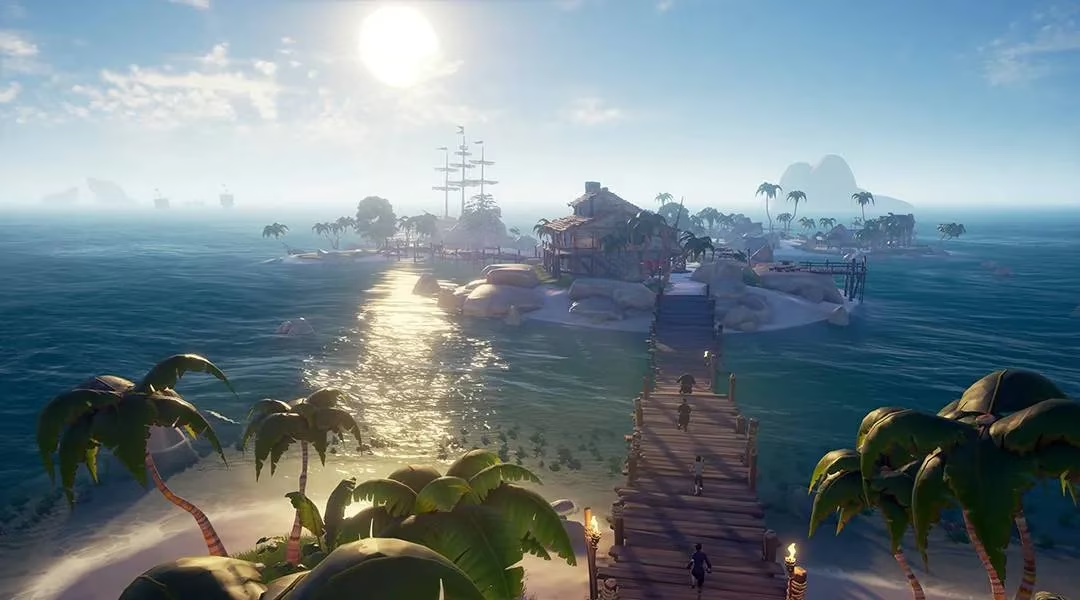
Even amid the login trouble, the closed beta had a clear job: give players a glimpse of the full release while keeping some of the bigger secrets hidden until the March launch. The pirate adventure was built around shared-world co-op, with players sailing the open seas in search of treasure alongside friends. Cross-play between Xbox One and PC had already been tested during the closed alpha, and the developers were working to balance the experience across both platforms.
The beta’s checklist was ambitious for a test:
-
🏴☠️ Shared-world co-op with friends on the same crew.
-
⚓ Cross-play between Xbox One and PC.
-
🗺️ Treasure hunting across the open seas.
-
🔒 A limited reveal, with bigger secrets held back for launch.
-
⚖️ Balancing work for both PC and Xbox One players.
That mix explains why the outage stung. Players were not merely trying to stress-test a menu; they wanted to taste the fantasy. A pirate game lives on momentum, and a login error cuts that momentum before the first sail is raised.
A 2026 Lens on a 2018 Stumble
By 2026, day-one stability is no longer a nice-to-have for online games; it is part of the product. The 2018 closed beta outage looks modest compared with modern launch storms, but the pattern is familiar. Players just wanted to set sail, and the front door was stuck. The episode also showed how quickly a beta can shift from marketing moment to crisis communication. Rare’s response was immediate, but the damage was measured in lost hours rather than lost trust.
For modern live-service teams, the incident is a reminder that eligibility, authentication, and web infrastructure are part of the player experience, not back-office details. A pre-order bonus means little if the account system says 'not yet.' The website outage compounded the confusion because players could not easily find status updates in one place.
| Pressure point | What happened | Why it mattered |
|---|---|---|
| Access gate | Eligible players saw a 'too early' error | Pre-order and alpha players could not board |
| Web traffic | The official site went down under the influx | Status information became harder to find |
| Communication | Developers said they were investigating | Trust depended on fast, clear updates |
The Takeaway
The closed beta did not need to be perfect. It needed to be playable enough to prove the fantasy: friends, ships, treasure, and a horizon full of trouble. For a while, the trouble arrived before the treasure. The developers kept working on a fix, and the wider release was still set for March 20, 2018, on PC and Xbox One.
The lesson was simple: a pirate’s first voyage is rarely smooth.
In 2026, that lesson still applies to every online launch. A beta can hide the biggest secrets, but it cannot hide a broken gangplank. Sea of Thieves eventually sailed far beyond its rocky test, yet the memory of that 'too early' screen remains a useful footnote for studios that promise smooth waters before the tide is ready.
As summarized by OpenCritic, early technical turbulence does not always define a game's long-term reputation, especially when the core player fantasy is strong enough to survive a rough launch window. In the case of Sea of Thieves, the closed beta's access issues underscored how much first impressions matter for online-only releases, while later critical and player reassessments showed that sustained updates, stronger onboarding, and reliable live-service support can gradually reshape perception.