
The digital seas are once again proving treacherous for pirates. In early 2026, a significant number of Sea of Thieves players found themselves marooned on the shores of reality, unable to log into the popular shared-world adventure game. Reports flooded in from around the globe, detailing connection failures and the all-too-familiar sight of error messages where vibrant, wave-tossed horizons should be. This outage, reminiscent of past service disruptions, underscores the ongoing challenges of maintaining seamless online experiences in an ever-expanding live-service universe.
The 2026 Server Disruption: An Overview
The core of the issue, as communicated by Rare's development team, centered on matchmaking systems. The official Sea of Thieves support channels confirmed that the game's servers were experiencing critical problems, preventing a large portion of the player base from embarking on their nautical escapades. A statement from the developers advised, "We are investigating a current issue affecting game access and matchmaking. Updates will be provided as we work towards a resolution. Players may experience significant delays or be unable to connect during this period. We appreciate your patience."
For affected players, the situation manifested in several frustrating ways:
-
Inability to connect to game servers from the main menu.
-
Extended loading screens that ultimately led to failure.
-
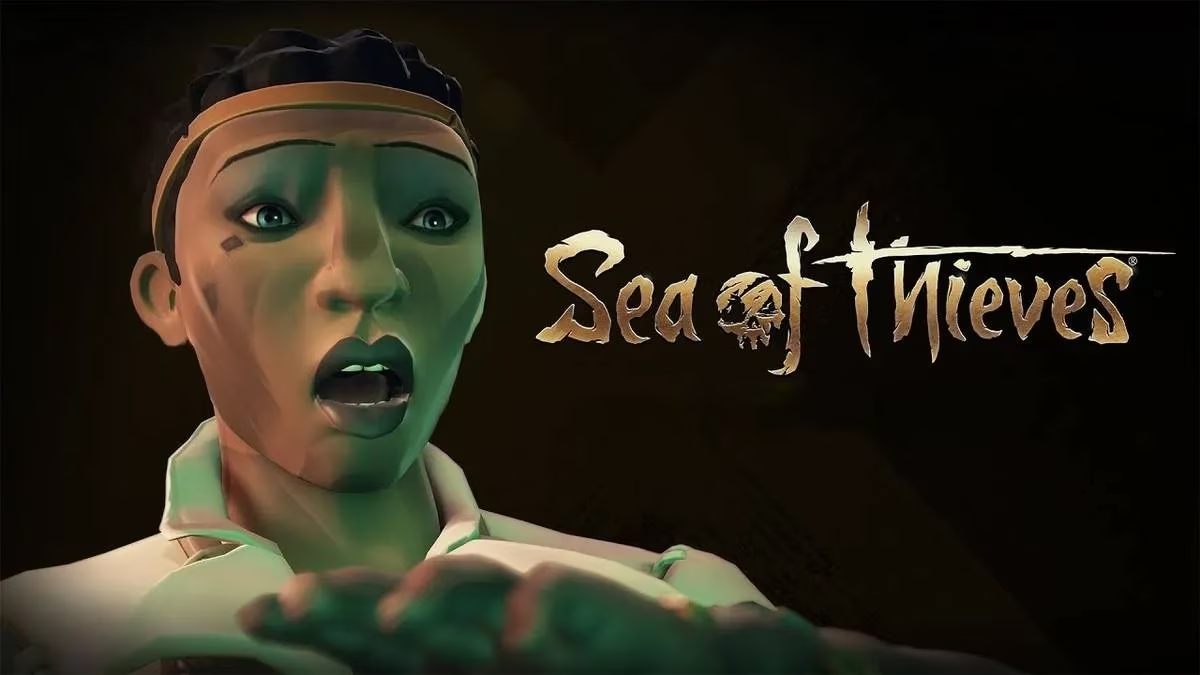
The reappearance of specific error codes, with the notorious 'Strawberrybeard' error acting like a spectral blockade, haunting attempts to set sail.
Community Reactions and Temporary Measures
The player community's response was a mixture of disappointment and resilient humor. Social media platforms and gaming forums became temporary taverns where grounded pirates shared their woes. While the widespread nature of the problem indicated a server-side issue requiring an official fix, some veteran sailors recalled old troubleshooting rituals. Suggestions from player communities included:
-
Console/PC Restart: A classic first step, akin to checking the rigging on a ship before a long voyage.
-
Router Reset: Occasionally, refreshing one's connection to the internet's vast ocean could clear minor pathfinding issues.
-
Patient Waiting: The most common and advised course of action, recognizing that the development crew was already scrambling in the engine room to address the core failure.
It is crucial to note that these are general troubleshooting tips for online gaming; during a confirmed, widespread server outage, they often provide little relief. The development team at Rare emphasized that the solution had to be implemented on their infrastructure. The matchmaking system, a complex digital harbormaster responsible for assembling crews and populating servers, had faltered. Getting it back online was not as simple as hoisting a sail; it required meticulous diagnostics and repairs on backend systems that are as intricate and interconnected as a ship's clockwork navigational array.
The Bigger Picture: Live Service Stability in 2026
This incident serves as a poignant reminder of the fragile ecosystems underpinning modern live-service games. For a title like Sea of Thieves, where shared, persistent adventures are the core selling point, server stability is not a feature—it is the very sea upon which the game floats. An outage doesn't just prevent play; it shatters the immersive world, leaving players adrift.
In the years leading up to 2026, the industry has seen massive investments in cloud infrastructure and server resilience. Yet, outages persist. They can be triggered by unforeseen surges in player count following new content drops, underlying software bugs introduced in updates, or external issues with broader cloud service providers. Ensuring constant uptime is a battle fought on a scale most players never see, a relentless effort to keep the digital tides flowing smoothly. The servers themselves operate like a vast, unseen coral reef—a living, complex structure that supports the entire vibrant ecosystem of the game, and when part of it bleaches or fails, the effects are felt by all.
Looking Ahead: Smooth Sailing or More Storms?
As of this writing in 2026, Rare has a track record of resolving such issues with relative speed, typically restoring service within several hours. The company maintains transparent communication during these events through its official support Twitter account and status page. For players eager to return to plundering, the best resources are:
-
The Official Sea of Thieves Status Page: For real-time updates on server health.
-
Developer Social Media Channels: For direct communication from the team.
-
Community Moderators: On official forums and Discord, who relay official information.
The enduring popularity of Sea of Thieves means its servers will continue to be tested. Each content expansion brings new and returning players, much like a gold rush flooding a port town. The development team's ongoing challenge is to scale and fortify their systems proactively. While outages are an unfortunate reality of online gaming, the expectation in 2026 is for rapid response, clear communication, and robust systems that minimize downtime. For now, the crew at Rare is likely still at the helm, working to calm the turbulent server seas and guide all pirates safely back to their beloved, briny playground. The game's world is a grand, shared story—a constantly unfolding tapestry woven from countless player interactions—and keeping the loom of the servers running is the fundamental task that makes that story possible.