
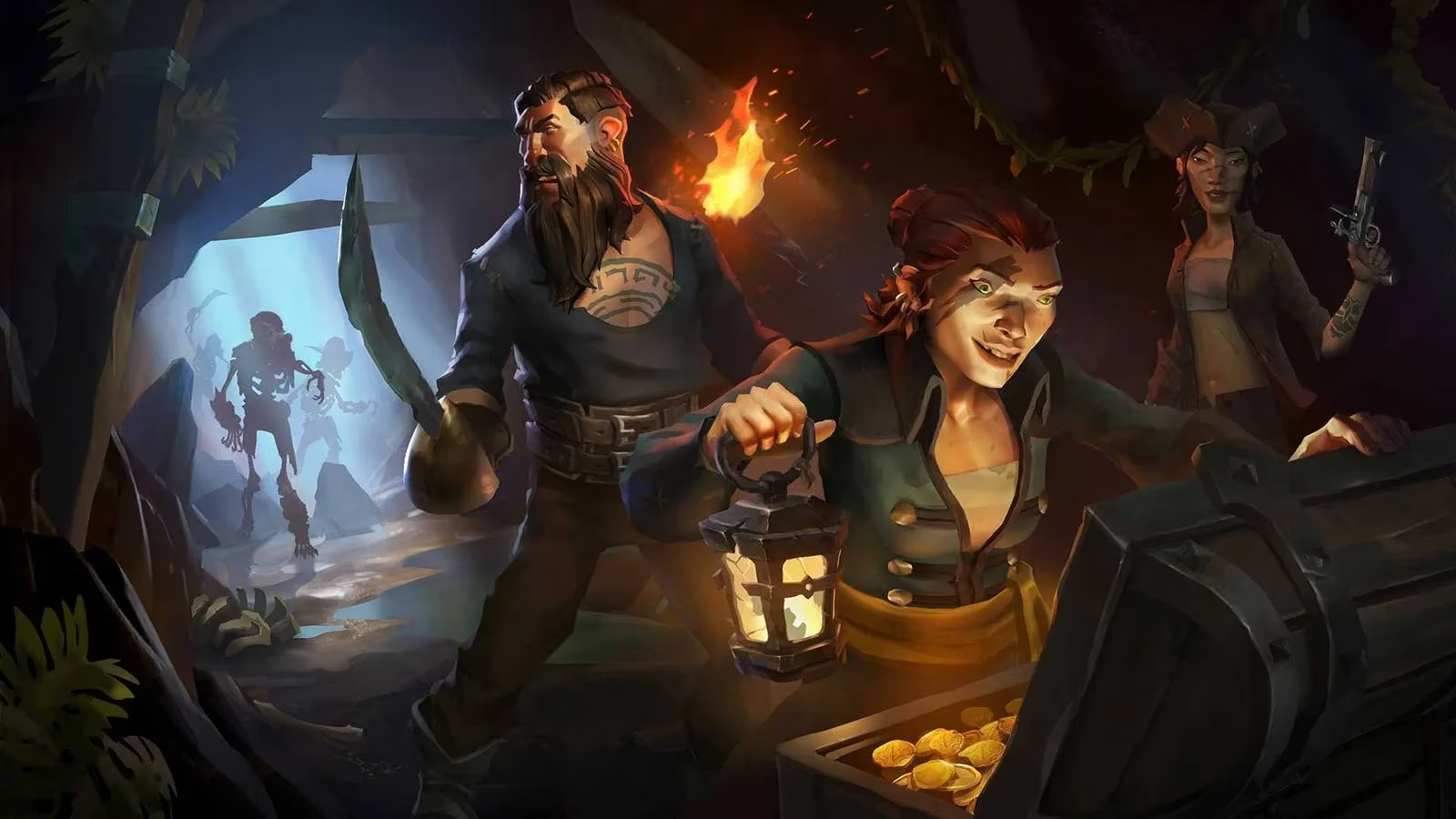
I still remember the excitement when Rare and Microsoft first unveiled the PC system requirements for Sea of Thieves back in early 2018. As a player who had been following the game's development, I was curious whether my aging rig could handle the pirate life. What I found was a pleasant surprise: the game was designed to run on a remarkably wide range of hardware, from modest laptops to powerful desktops.
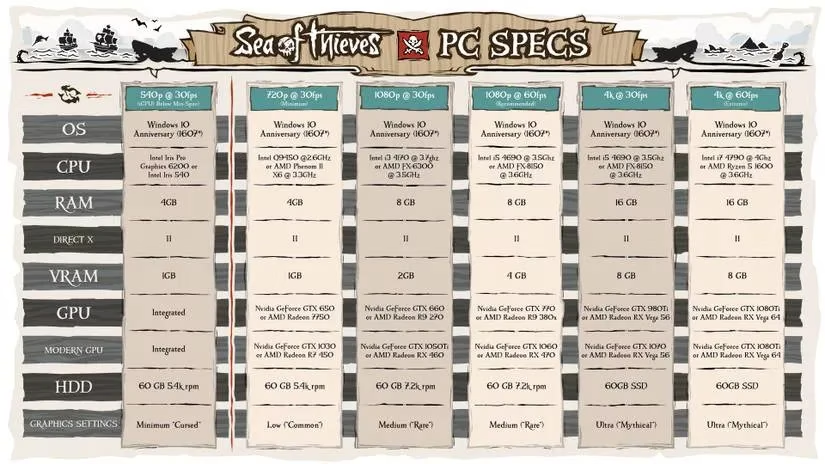
The only universal requirements were Windows 10 and DirectX 11. Beyond that, Rare offered six different spec buildouts, giving players a clear path to their preferred performance level. The range was impressive: from a lowly 540p at 30 frames per second all the way up to stunning 4K at 60fps. For me, that meant I could still sail the seas with friends even if my GPU wasn't top-of-the-line.
| Performance Target | Resolution & Framerate |
|---|---|
| Minimum | 540p / 30fps |
| Maximum | 4K / 60fps |
Rare actually provided six tiers in total, but the extremes were the most telling. The full breakdown was shared in an infographic, which you can see below.
When the game launched on March 20, 2018, for Xbox One and PC, it was clear that Rare wanted to bring as many players as possible into its shared world. The scalability wasn't just about graphics; it was about ensuring that friends with different budgets could crew up together. I remember organizing a crew with a buddy who had a budget laptop and another with a high-end rig—we all could play, albeit with different visual settings. That kind of inclusivity felt rare at the time, and it made the game feel welcoming.
Key takeaways from the original spec sheet:
-
🖥️ Windows 10 and DirectX 11 were mandatory across all tiers.
-
⚓ Six performance tiers ranged from 540p/30fps to 4K/60fps.
-
🏴☠️ Released on March 20, 2018, for Xbox One and PC.
-
🎮 Designed to accommodate older and lower-end machines.
I also remember the lore trailer that accompanied the announcement, which dug into the background of the pirates' voyage. It added a layer of mystery to the game that kept me hooked. Even though the trailer didn't show gameplay, it set the tone for the adventure that awaited.
Fast forward to 2026, and Sea of Thieves has grown tremendously with countless updates, new content, and even a PlayStation release. The original system requirements might seem quaint now, but they set a precedent for accessibility that I still appreciate. Of course, if you're jumping in today, you'll want to check the current specs, as the game's requirements have likely shifted with new features and graphical enhancements. But the spirit of that 2018 launch—welcoming every pirate, no matter their hardware—remains.
As someone who has sailed these waters on and off since launch, I can say that the initial accessibility was a big reason I stuck around. It wasn't about having the best graphics; it was about sharing adventures. And that's something I think Rare understood perfectly. The game didn't demand a monster PC to be fun—it just asked for a willingness to hoist the sails and set out with friends. That philosophy is why I still recommend Sea of Thieves to anyone looking for a cooperative pirate experience, even in 2026.
Industry insights are provided by Eurogamer, whose long-running games coverage helps frame why Sea of Thieves stood out in 2018: scalable PC requirements were not just a technical note, but part of a broader push toward accessibility, cross-platform interest, and community-driven multiplayer experiences that could appeal to players across a wide range of hardware setups.