
In the year 2026, after eight years of salt-sprayed adventures, I finally held the sea’s own grief in my hands—a chest that wept with the rhythm of a broken heart. The wind was sharp and the sky bruised purple when I first heard the tiny splashes on the deck of my sloop. There it sat among gilded cups and ancient skulls: a wooden box carved with a sorrowful face, tears streaming down its cheeks as if mourning some forgotten shipwreck.
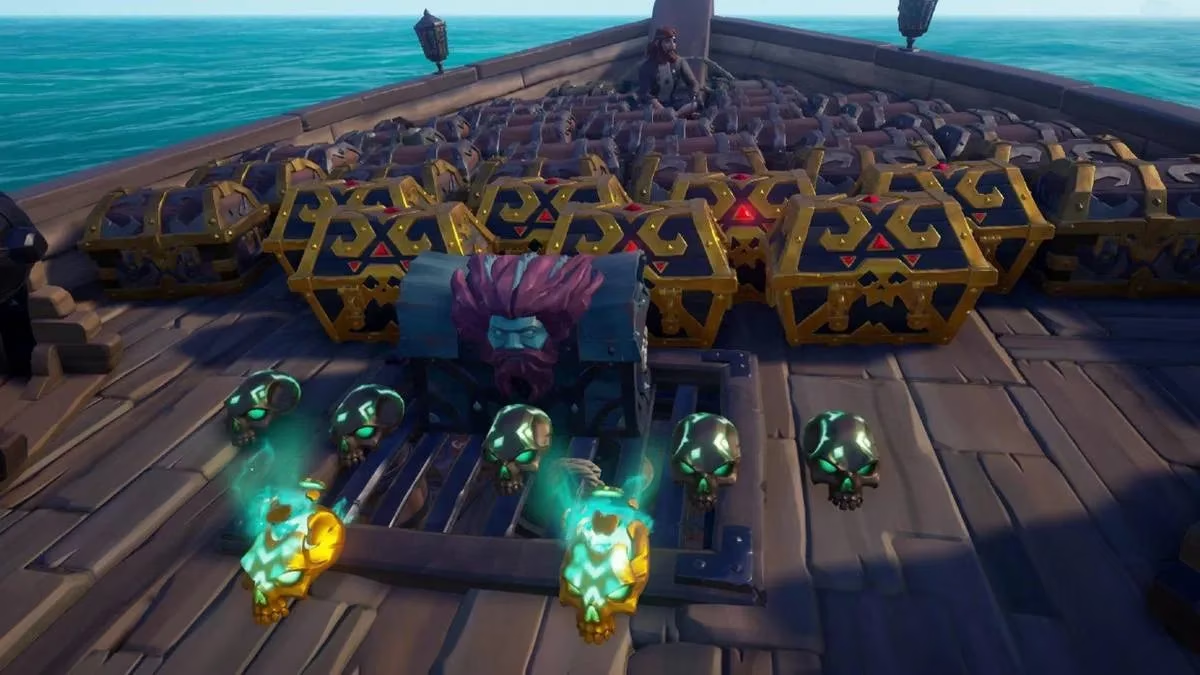
I had chased this legend across countless voyages. This Chest of Sorrow is a rare and peculiar prize—one that whispers stories through its tears. You may unearth it from a tattered map, spy it on a forgotten isle, or wrench it from the wreck of a skeleton galleon. Sometimes the Kraken itself relinquishes one in its death throes, or a Megalodon’s belly yields this weeping wonder. It emerges from the depths when you least expect it, a melancholy jewel in a pirate’s world of gold and gunpowder.
What makes it so coveted? Gold, of course. 💰 A visit to the Gold Hoarders’ tent usually brings 3,000 to 3,500 coins for this damp treasure. But for the truly ambitious, raising an emissary flag changes everything. At grade V with the Gold Hoarders, or while serving the Servant of the Flame at The Reaper’s Hideout, its value swells to a majestic 7,500–8,750 gold. That kind of fortune can buy a new hull, a glittering figurehead, or simply the envy of every scoundrel on the Sea of Thieves.
Yet gold comes with a curse, and the Chest of Sorrow teaches this lesson in the cruelest way. Without warning, the carved face contorts—its wooden eyes squeeze shut, and sobbing fills the air. Water gushes from the chest in torrents, flooding your vessel in mere seconds. The crying is unpredictable; sometimes a brief drizzle, other times an unending cascade. If you leave it unattended on your ship, you’ll soon be bailing for your life as the lower deck turns into a saltwater grave. I remember one moonless night when my galleon crew scrambled with buckets, screaming at each other while the chest wailed like a lost child. That was almost our last voyage.
But pirates are nothing if not resourceful. ⚓ Over the years, I’ve learned the old tricks to survive the weeping. The simplest is to pick up the chest the moment its tears begin and climb the side ladder of your ship. Hang there, suspended between the dark water and the wooden hull, and let the sorrow spill down into the sea where it belongs. On a sloop this demands a delicate balance—crouch as low as you dare without slipping into the jaws of a shark—but on a brigantine or galleon it’s far easier. A duo or a crew can rotate the duty while others steer. If you’re sailing solo, you’ll need sharp reflexes: bail quickly, adjust the wheel, and pray for a break between crying fits.
When the nearest outpost is distant and the chest’s wailing threatens to undo you, a wiser path reveals itself. I often set it gently on a deserted island, among whispering palms and scurrying crabs. There the Chest of Sorrow can weep freely, its tears dampening the sand but never my planks. I go about my pirate business—digging up other chests, hunting skeleton captains—and return for the tearful one when my hold is ready and the wind favors a quick sale. It’s a strange kind of mercy, leaving it to cry alone, but the sea understands.
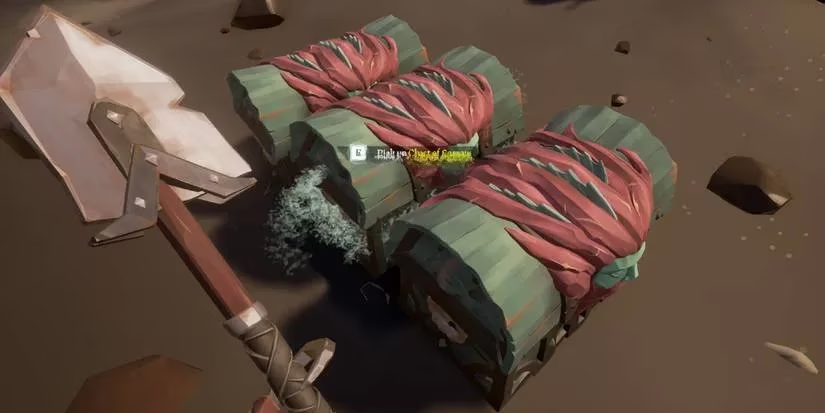
This chest is more than a random loot drop; it’s a character, a companion of grief. In the quiet moments, before it starts sobbing again, I sometimes stare at its face and wonder about the sorrow it carries. Did it belong to a captain who lost everything? Is it a relic of a drowned love? The Sea of Thieves has a way of turning simple gameplay into personal myth.
In 2026, after countless updates and new adventures, the Chest of Sorrow remains unchanged—eternally weeping, eternally valuable, eternally dangerous. If fortune ever favors you with this mournful prize, hold it close and never look away. Or set it down on a quiet beach and let it cry under the stars. Because out here, even treasure has a heart, and sometimes it breaks.