
There is something deliciously analogue about landing in a foreign city and figuring out the metro system with nothing but a paper map and a prayer. It's a cocktail of anxiety and triumph that modern video games have largely sanitised out of existence. While players in 2026 have access to sprawling digital landscapes that would make cartographers weep, the thrill of genuine discovery has been swapped for a trail of glowing breadcrumbs. The industry might finally be waking up to the fact that hand-holding isn't the same as good design—and the games that dare to remove the GPS are the ones players actually remember.
The crux of the problem is the ubiquitous waypoint. Open-world titles have conditioned a generation of gamers to stare at a minimap instead of the horizon. Give a player a massive world filled with icons, and their brain switches to autopilot—moving from marker to marker without absorbing the space in between. It’s the difference between learning a city’s street grid and simply following a blue dot on a phone. When the destination is all that matters, the journey becomes filler.
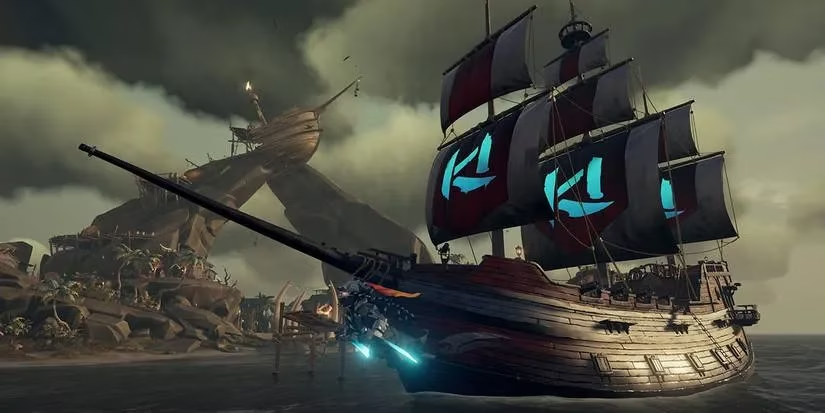
A handful of developers have bucked this trend, proving that navigation can be the most engaging mechanic in the game if given room to breathe. Sea of Thieves remains a masterclass in this philosophy nearly a decade after its launch. The pirate adventure doles out cryptic riddles and asks crews to navigate using an actual compass and map table, with zero magical waypoints. Players squint at the shape of islands, argue about bearings, and learn to read the sea itself. Through prolonged play, the archipelago stops being a collection of assets and becomes a home port the mind can chart blindfolded. The travel is the adventure—and that’s a hill salty veterans will gladly die on.
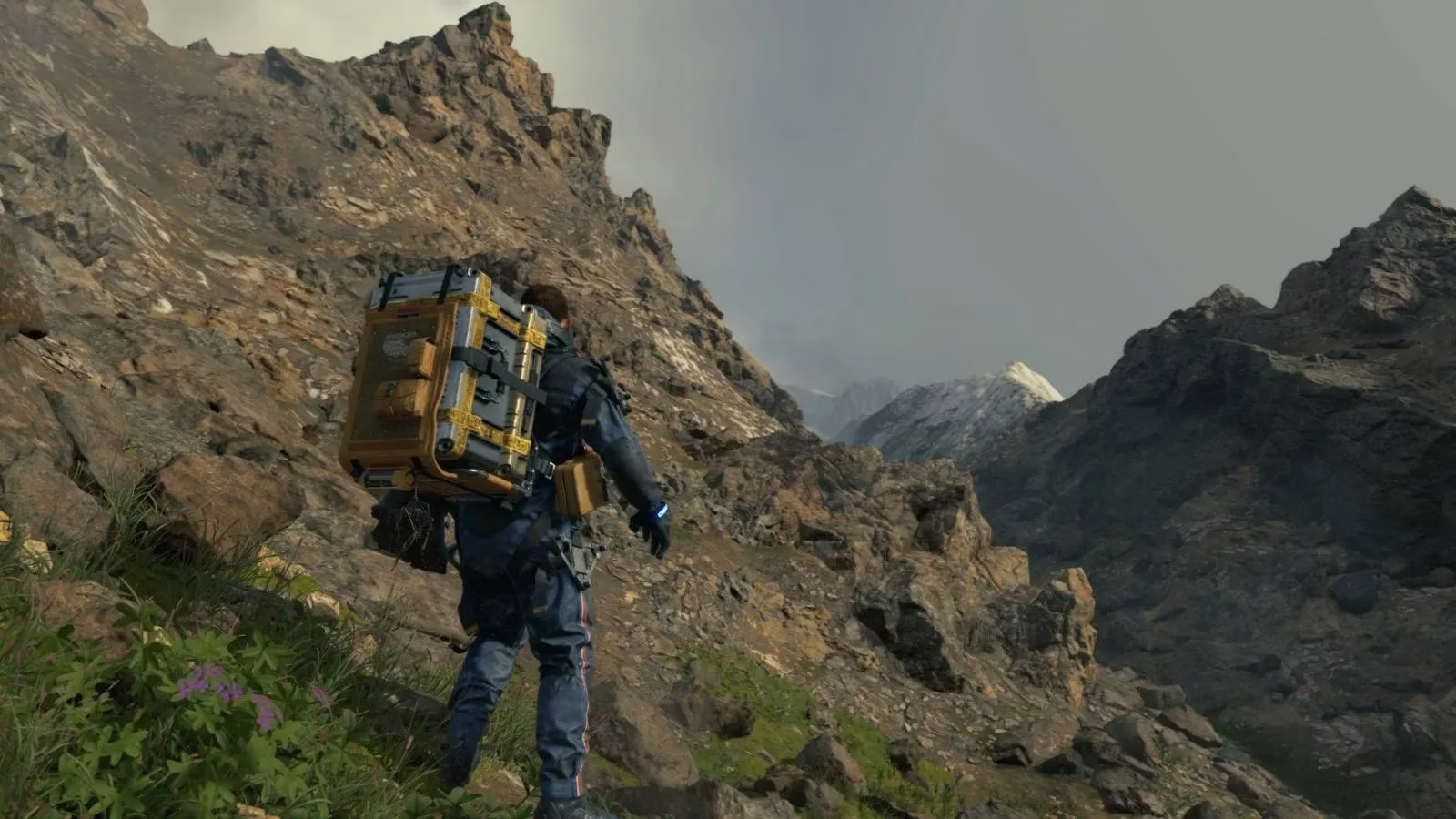
Hideo Kojima’s Death Stranding took an even more radical swing by making traversal the entire game. While its exposition dumps could test the patience of a saint, the core loop of plotting a route across treacherous terrain is peerless. Players pore over topography, deciding whether to scale a cliff with ladders or circle around through B.T. territory. The game’s silent protagonist Sam Porter Bridges builds zipline networks and bridges that persist in other players’ worlds, turning the landscape into a collaborative memory palace. Years later, fans can still recall exactly where they erected a crucial rope anchor—something that can't be said for the millionth copypasted cave in a Ubisoft sandbox.
This reverence for thoughtful travel harks back to Morrowind, which in 2002 offered a fantasy world that refused to chauffeur the player. It provided a physical paper map, a network of silt strider routes resembling a fantasy London Underground, and a firm “off you go.” Fast travel cost coin and required knowing which strider connected to which town. The result? Vvardenfell became a place players knew, not just visited. Modern sequels largely jettisoned this system for click-to-teleport convenience, sacrificing immersion on the altar of accessibility. Fast travel should feel like a treat, not a birthright.
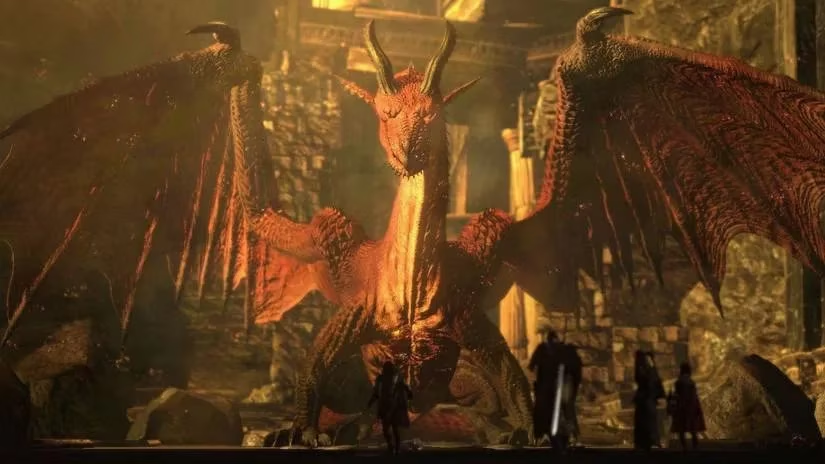
Dragon’s Dogma and Elite Dangerous each tackled the travel dilemma from opposite ends of the genre spectrum, yet both landed on the same truth: friction creates value. Capcom’s cult classic restricted fast travel to late-game Portcrystals that players had to physically haul across the map to establish a custom network. It was labor, and it felt earned. Elite Dangerous, on the other hand, forces pilots to plot multi-jump routes through star systems while managing fuel scoops and station pit stops. A pilgrimage to Sol isn’t a loading screen—it’s a logistical triumph that can go sideways in a heartbeat. Both approaches make the player an active participant rather than a passenger.
The tide appears to be turning slowly as the industry matures. Indie darlings and even a few AAA titles in the mid-2020s have been ditching omnipresent quest markers in favour of diegetic navigation aids like compasses, road signs, and NPC directions. Community map-making and cartography mods have seen a renaissance, proving players are hungry for that sense of being an explorer again. It’s a lesson the holiday analogy drives home perfectly: a week in a new city teaches you its arteries by heart because you build a mental model through trial and error. When a game trusts its world enough to let players get lost, it gives them the gift of actually belonging there.
The next time a developer is tempted to litter a landscape with glowing arrows, they should remember what made that pirate crew shout at each other in the fog, or why a lone porter still pauses on a ridge to survey the path they carved. Exploration isn’t a chore to be optimized away—it’s the whole damn point. 🧭
As we continue to explore the evolving landscape of video games, it's clear that the journey can be as captivating as the destination. Whether you're a seasoned explorer retracing your steps in a beloved virtual world or a newcomer eager to discover uncharted territories, the thrill of immersion is universal. But as any dedicated gamer knows, embarking on new adventures often starts with finding the right game at the right price.
If you're keen to dive deeper into these immersive worlds or seek out the next title that promises to captivate your imagination, it's worth taking a moment to check game prices at DealNest. Whether you're looking for the latest releases or hidden gems, a quick look could reveal the perfect addition to your gaming library. As you prepare for your next epic journey, ensure your toolkit is as ready as your spirit of adventure. Happy exploring!